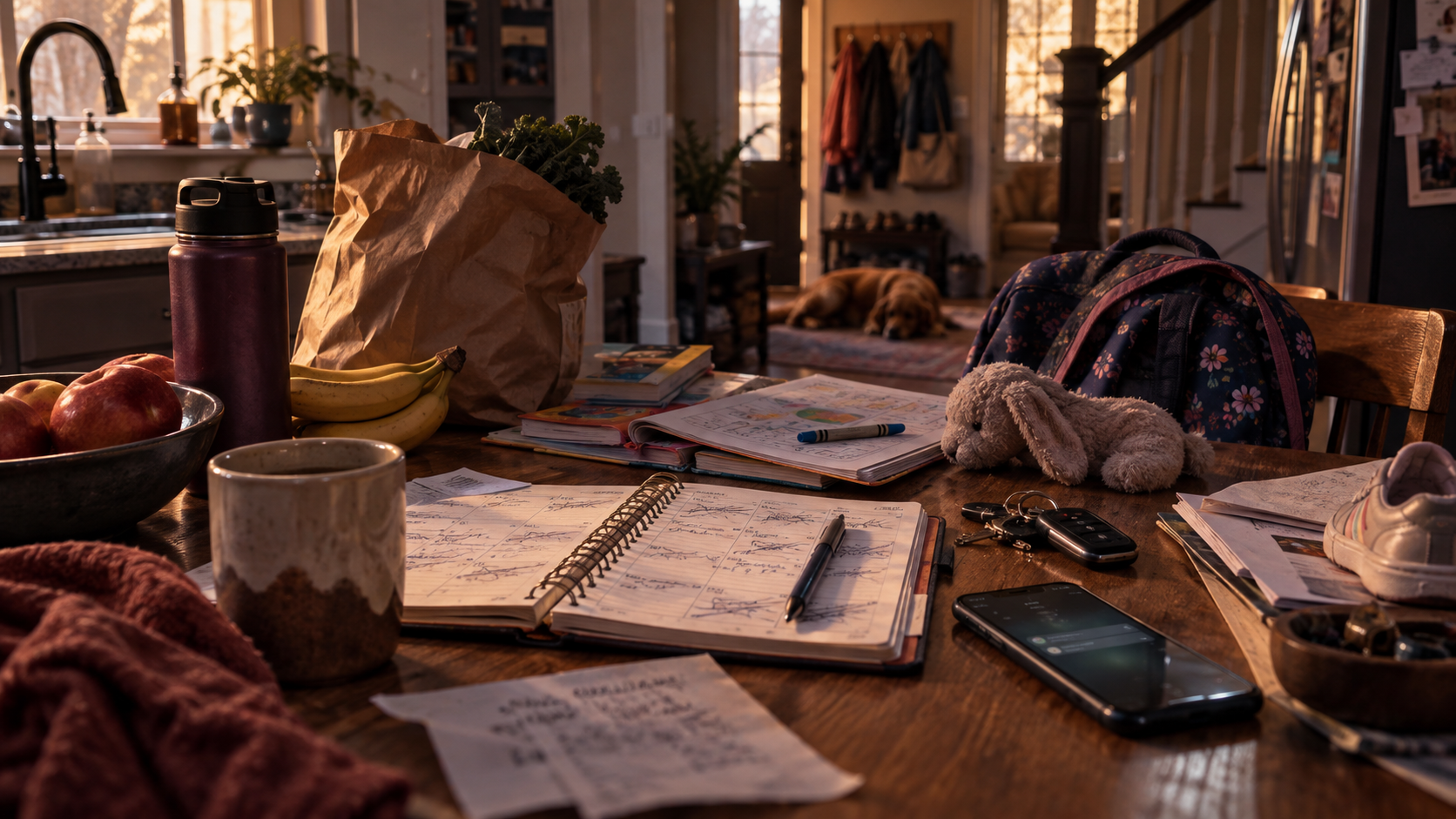
I would like one week without a side quest, please. Not a perfect week, because I have realistic expectations and some experience with my own life. I am not asking for seven peaceful days, empty laundry baskets, perfect schedules, or children who suddenly remember everything before we leave the house. I would simply like to finish one normal task without unlocking four more that were never part of the plan.
That feels like a small request. Unfortunately, life seems to think I bought the deluxe version with every optional mission already turned on.
Nothing Is Ever Just the Thing
Some people can say, “I need to run one errand,” then leave the house, finish it, and come home. I assume those people also know where all their important paperwork is and remember their passwords without resetting them. They probably have never stood in a parking lot wondering how one quick trip became an entire afternoon.
In my life, an errand is rarely just an errand. It starts with realizing we need something. Then someone cannot find a shoe, another person remembers something else they need, and the closest store does not have the original item. By the time everyone is ready, the trip has grown into something much bigger than I planned.
Leaving the house only starts the next phase. There might be construction, a bathroom emergency, or a store that moved everything since my last visit. None of these things are major problems by themselves. Put enough of them together, though, and a twelve-minute errand suddenly has a beginning, middle, climax, and sequel.
My To-Do List Keeps Growing New Limbs
I like lists because they make life look organized. A checkbox suggests that a task has a clear beginning and end. In theory, that is comforting. In practice, I am starting to think the checkbox is lying to me.
“Call doctor” rarely means making one phone call. It can turn into waiting for a callback, checking the patient portal, calling the pharmacy, and finding out the pharmacy needs something from the doctor. After that, I am back where I started.
“Finish school” can grow just as quickly. It may include logging in, finding the right lesson, fixing audio, locating a workbook page, helping with a recorded answer, and explaining the instructions again. Sometimes the lesson itself is the easy part.
Household jobs are not much better. “Clean kitchen” sounds simple until the dishwasher needs unloaded, something sticky appears on the floor, and an empty box is sitting in a cabinet for no clear reason. Somehow, one task turns into three others before I can cross anything off.
Nothing ever seems to end cleanly. Every task arrives with extra attachments.
The Side Quests Never Introduce Themselves
The most annoying side quests do not warn you first. There is no dramatic music or glowing symbol over somebody’s head. Most of the time, all it takes is opening an email.
One message can reveal a school form that needs signed. Another can remind me about an appointment that needs confirmed. A bill might look wrong, or an account may suddenly reject a password that worked perfectly well before.
A quick check can turn into resetting passwords, searching inboxes, comparing dates, and logging into another website. Forty minutes disappear, and I am left trying to remember what I was doing before any of this started.
That does not always mean I wasted the day. A lot of time gets used by necessary work that never made it onto the plan. Those tasks still count, even when they are almost invisible by the end of the day.
Online School Has Its Own Expansion Pack
Online school is very good at creating extra jobs. The schoolwork itself is only one part of the day. There are live classes, videos, reading, math, handwriting, phonics, and assignments, but there is also everything that helps those things happen.
Someone has to log in and find the right page. The microphone has to work. The correct activity needs to open. Recorded answers need help sometimes, and directions may need to be explained in a different way.
A lesson can go smoothly for twenty minutes before one small tech problem changes everything. Suddenly, the next part of the school day becomes a support call nobody asked for. Sometimes the computer works perfectly. Other times, it acts like it has decided education is not part of its personal goals.
By the time we finish, we may have completed everything we needed to do. That does not mean the day went according to plan. Finishing the work and following the schedule are often two very different things.
Chronic Illness Is Terrible at Respecting the Main Story
Then there is my body, which has never cared much about my calendar. I can plan around appointments, school, errands, meals, writing, and household tasks. What I cannot plan is when my body decides to change the schedule for me.
Some days, symptoms stay manageable enough that I can keep moving. Other days, I need more breaks or have to move things around. A task takes longer, something gets pushed to tomorrow, and tomorrow becomes more crowded than it was supposed to be.
The original responsibilities do not disappear when that happens. School still exists. People still need food. Messages still arrive, and appointments still have dates attached to them. The household keeps producing new tasks like it has never heard of sick leave.
Sometimes rest becomes the most important thing on the list. That does not erase everything else. It only forces the rest of the day to rearrange around it.
The Small Stuff Is What Wears Me Down
Big problems are easy to explain. When something serious happens, priorities change. Most people understand why the original plan no longer matters.
The smaller chaos is harder to describe because each problem sounds minor on its own. A login stops working. A form needs one missing piece of information. An appointment gets moved. Someone needs something the second I finally sit down.
One small problem is nothing. Several before lunch can make the whole day feel harder than it should.
That is also why some days are difficult to explain afterward. If someone asks what I did, the answer might sound unimpressive. I helped with school, answered messages, made a call, picked something up, fixed a problem, and moved another task to a different day.
Nothing dramatic happened, but the day still took a lot out of me. Every interruption forces my brain to change direction. Then I have to remember what I was doing before the new problem appeared.
Sometimes I make it back to the original task. Other times, that task quietly becomes tomorrow’s side quest.
I Keep Planning Anyway
You might think I would stop making plans after seeing how often they change. I have not. I still wake up, look at what needs done, and decide what I would like to finish that day.
There is something almost funny about the confidence required to make a schedule when I know how my life works. I know things will shift. Unexpected tasks will show up, and a normal Tuesday can become complicated before breakfast.
Still, having a plan helps. Direction matters even when the route changes. Over time, I have had to learn the difference between a schedule failing and a schedule changing.
For years, I treated every messy day like proof that I had managed my time badly. Sometimes I do procrastinate or guess wrong about how long something will take. Other times, the calendar simply did not know what the day was going to ask of me.
That is not always bad planning. Sometimes it is just incomplete information.
Maybe the Side Quests Are the Story
I would still like one week without a side quest, for the record. I would love to wake up Monday, finish what I planned, and make it through the week without a forgotten form or broken login. No surprise symptoms, extra appointments, missing items, or sudden requests that begin with, “Hey, Mom?”
At this point, I would probably get suspicious by Wednesday. A quiet week might feel less relaxing and more like the part of a movie where everything is calm for reasons nobody should trust.
The more I think about it, the more I realize these side quests are not interruptions to the real story. The writing happens between them. Parenting happens inside them. School, errands, appointments, conversations, frustrations, jokes, small wins, and complete nonsense all happen in the same messy space.
There may never be a long stretch where everything settles down and the “real” story finally begins. This probably is the real story. I still reserve the right to complain about the quest design.
0 thoughts on this story